
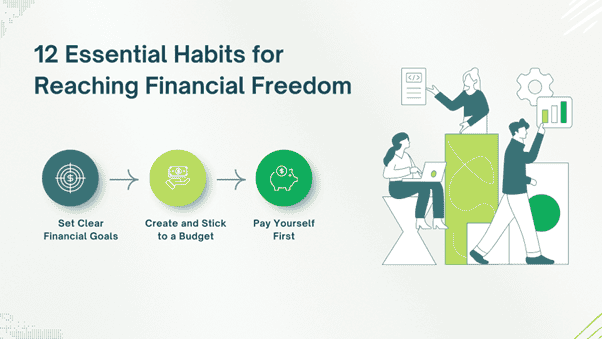
Financial freedom is something that many people strive for, but it takes more than just making a high income. It’s about making smart and consistent financial decisions. This blog will discuss ways of gaining financial independence through developing 12 important financial habits. By implementing these habits into your daily life, you will be able to work towards a secure future and live life on your own terms.
What is Financial Freedom?
Financial freedom is the ability to live your life without being constantly stressed about money. Financial freedom means that you are financially stable enough to cover your costs without relying on your salary, through adequate savings, investments or passive income. Financial freedom also means that you are not restricted by your financial needs, so you are able to make decisions that are based on your wishes and not financial requirements. It is about being in control of your money; it could be early retirement, it can be a passion project, or it can be living without the nagging burden of finances. Financial freedom is a process, and it begins with developing good financial habits.
12 Key Habits to Achieve Financial Freedom
Without the correct habits, financial freedom is next to impossible. Such practices will make you capable of controlling your finances, building wealth over the long term, and eventually living life to your own rules. These are 12 habits that can transform everything to allow you to begin on the correct path to financial independence.
1. Set Clear Financial Goals
Clear financial goals are the first step towards the goal of achieving financial freedom. It is hard to remain motivated and keep track of the progress without a target. You may have a goal of saving towards retirement, buying a house or paying off debt. Whatever they are, ensure they are specific, measurable and time-bound. Goal-setting provides a sense of direction and also maintains a focus on the larger picture, which means that each financial decision can be based on the vision of the future.
2. Create and Stick to a Budget
A monthly budget is a potent instrument that enables you to control your income and expenses. When you keep a record of your expenditure, you are able to realise where you are overspending, and you can change it. It is important to live within your budget by focusing on necessities rather than wants, and you should also ensure that you save and invest. A good budget also means that you are not using a lot of money than you are making, so that you can save money to use in future objectives.
3. Pay Yourself First
One of the most important habits to adopt is the “pay yourself first” strategy. Before you pay any bills or make purchases, prioritise saving and investing. Set up automatic transfers to your savings or retirement accounts as soon as your paycheck arrives. By making saving a priority, you’ll ensure that your future is funded, and you’ll build wealth consistently over time.
4. Eliminate High-Interest Debt
High-interest debts, such as credit card balances, can quickly derail your path to financial freedom. Focus on eliminating these debts as soon as possible. Paying off high-interest debt frees up more of your income, which can be redirected toward savings and investments. Once you’ve cleared high-interest debts, be mindful of maintaining a debt-free lifestyle to avoid falling back into the cycle.
5. Invest Consistently
One of the best strategies for accumulating wealth and financial independence is to invest regularly. Investing in stocks, bonds or retirement accounts, make sure that you put in regularly, even with a small amount. Compounding returns will ultimately assist in enlarging your investments over time. The sooner you invest, the more you will gain through regular long-term investment.
6. Build an Emergency Fund
An emergency fund is used as a financial cushion in unforeseeable circumstances such as medical emergencies, car repairs or loss of a job. The emergency fund is fully-funded (typically 3-6 months of living costs) so that you will not need to access savings or get into debt during a life curve ball. You will have to set aside a little every month until you have the amount you want saved, and you must not mix this sum with your everyday savings.
7. Track Your Spending
Monitoring your expenditure is very important in maintaining financial control. You can use apps or a Google Sheet to classify your expenditures and identify the areas that you can reduce. Keeping a record of your expenditure will enable you to pin down bad habits like expenditure on unnecessary items and enable you to make more conscious decisions on how and where you spend your money.
8. Live Below Your Means
Living below your means is essential to becoming financially free. This includes living below what you make, and being aware of lifestyle inflation. Just because your income is increasing, do not be tempted to increase your lifestyle to a similar degree. Rather, use the additional earnings as savings and investments. One method of doing so is to save automatically, meaning that your income is deposited directly into savings or investment accounts so that you cannot ever access this money. By living below your means, you will not be at the mercy of your paycheck, but you will be able to accumulate wealth in the long term.
9. Diversify Your Income Streams
Relying on a single income source can be risky, especially if something unexpected happens, such as a job loss. To increase your financial security and build wealth faster, look for ways to diversify your income streams. This could include side jobs, freelance work, rental income, or dividend-paying investments. Multiple income streams reduce your dependency on a single paycheck and allow you to save and invest more efficiently.
10. Continuously Educate Yourself About Personal Finance
The personal financial world is ever-changing, and people should be updated on new strategies, investment opportunities, and other financial trends. Take the time to read books, listen to podcasts, and follow financial experts who can teach you valuable lessons about money management, taxes, investing, and growing wealth. The more you know, the better equipped you’ll be to make smart financial decisions.
11. Revise Your Financial Plan on a Regular Basis.
Your financial plan must be a living document, which you change with the changes in your life circumstances. No matter how far ahead you are in your career, the events in your life, or financial difficulties, it is worth looking at your financial plan at regular intervals. In this way, you can implement the required necessary changes in terms of your budget, savings, investments and financial goals to keep pace with becoming financially independent.
12. Be Patient and Consistent
Building wealth and achieving financial freedom takes time. It’s important to stay patient and consistent with your habits, even if you don’t see immediate results. Financial independence is a marathon, not a sprint. Stick to your goals, keep investing, save regularly, and stay disciplined. Over time, your efforts will pay off, and you’ll find yourself closer to financial freedom.
Common Mistakes to Avoid
While working toward financial freedom, it’s easy to fall into common traps that can slow down your progress. Here are five key mistakes to avoid:
1. Failure to Have Specific Financial Objectives.
One of the mistakes that many people commit is a lack of clear financial goals. It is more difficult to be motivated or see your progress without particular targets. Having an objective such as saving to buy a house, creating an emergency fund, or saving towards retirement will provide direction and better decisions on finances. Make sure that your goals are specific, measurable, and that there is an appropriate schedule to keep you going.
2. Living Beyond Your Means
Spending more and more as your income goes up is tempting, which is called lifestyle inflation. While it’s natural to want to enjoy the fruits of your labour, living beyond your means can quickly eat away at your savings. To avoid this, focus on living below your means. Rather than upgrading your lifestyle each time your salary increases, allocate extra income toward savings and investments to build wealth over time.
3. Ignoring High-Interest Debt
Credit card debt that is charged with high interest may severely impede your saving and investment capacity. These debts can compound interest at a very fast rate and leave you unable to achieve serious financial gains. To prevent this, it is better to first clear off the debts that have high interest rates. After clearing your debt, you will have more disposable income to save, invest and achieve financial independence.
4. Failing to Budget
Budget is a must to help you spend your money wisely, yet this is a very important habit that most investors neglect. When there is no budget then it is easy to spend money and fail to save. Make some time to develop a monthly budget where you record your income and expenditures. Making a proper budget helps you begin to secure your future by investing and saving. The remaining part of your income can then be used to take care of your basic needs easily.
5. Chasing Quick Fixes
What most people do is to get into a trap of seeking quick solutions or get-rich-quick plans. Such schemes usually seem lucrative and may be high-risk or even illegal. Instead of going on a short journey, save consistently, invest and enjoy good financial practices to become wealthy. The process of financial freedom is long and time-consuming, but it is best achieved by long-term disciplined practices.
Final Thoughts
Financial freedom does not come easily and is a process that involves a lot of patience, steadiness and intelligent saving and spending. With proper planning, spending within your means and clearing high-interest debt, you would have a strong foundation of financial freedom. One of the best methods to stay on the path to financial freedom in the long term is to budget and save. Financial freedom is not about getting rich overnight, but making prudent choices every day that will pay off in the long run. Be persistent with these habits, and you will be well on your way to a secure and stress-free financial future.